
Chinese men have been found buying young Nepali women under the guise of marriage solely to bear children, subjecting them to abuse once the child is born.
Sasmita (name changed) from Tanahun received a marriage proposal at the age of 19. The groom, brought by a neighboring sister (whose name Sasmita did not wish to disclose), was a Chinese national.
Lured by the promise of marrying in China, living a comfortable life there and receiving financial support for her parents, along with taking them on trips to China, she agreed to the marriage.
Her prospective husband did not just cover all expenses for her passport, visa and air tickets. While preparations were underway for her flight, he also handed 200,000 rupees to her parents through that same neighbor.
Sasmita’s school friend was already in China, having married there. Once everything was finalized, she told her friend she was coming to China for marriage. “Think carefully before coming. If you end up with the wrong person, you will suffer,” her friend’s message startled Sasmita the day before her flight.
Sasmita felt disheartened after her friend revealed that despite her reluctance, her husband and his family pressured her to have a baby, only to mistreat her after the child was born. However, with all preparations in place, she didn’t feel like backing out at the last moment. “My classmate who was already there told me to be sure before coming,” Sasmita recalled. “Once everything was set for China, I didn’t want to betray them and refuse to go, making it seem like I took their money and ran.”
Yet, what her friend had warned her about before leaving for China turned out to be her reality. While she was not physically beaten by her husband’s family, everything else that happened was against her will. She became pregnant and gave birth to a daughter involuntarily. “Getting pregnant after marriage is normal, and women naturally desire motherhood, but I had to become a mother out of coercion, not choice,” she shared.
After the baby was born, the family ignored Sasmita. When she expressed her wish to return to Nepal with her daughter, they refused. Sasmita says they snatched her daughter away, forcing her to return to Nepal alone.
Her experience confirms that Chinese men marry Nepali young women solely to have offspring, subjecting them to violence once the children are raised. China’s one-child policy severely distorted its gender ratio. Unable to find brides in time, men pass marriageable age and ultimately marry foreign women just to have children.
Nepal Police data shows Nepali and Chinese brokers have been arrested for trafficking and selling young Nepali women to China under the pretense of marriage. In the cases documented in our reporting, the women said their marriages were arranged so they could bear children for their husbands, and that they faced abuse once their children were born.
The Migration Policy Institute’s research article, titled ‘China’s Demand for Brides Draws Women From Across Southeast Asia, Sometimes by Force’, notes that Chinese men buy women under the guise of marriage and force them to bear children.
Although this article focuses on Southeast Asian countries like Myanmar and Cambodia, the experiences of the Nepali women we interviewed who married Chinese men are no different. Trafficked under the pretext of marriage to China, a country with entirely different religion, culture and lifestyle, these young Nepali women are left stranded and destitute. The National Human Rights Commission’s National Report on the Rights Against Human Trafficking (2025/26) also states that Nepali women are being trafficked to China through fake marriages.
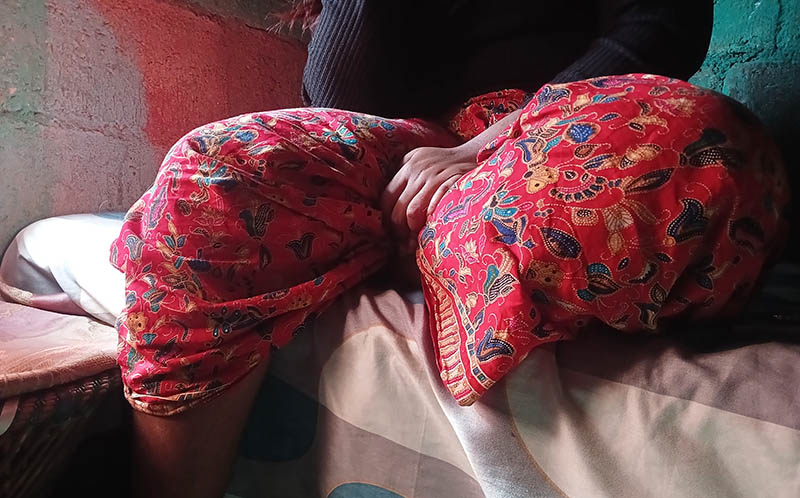
The experience endured by Sasmita from Tanahun confirms that she was trafficked solely to bear a child. After being warned by her friend in China, Sasmita had put forward a condition to the neighboring sister who arranged the Chinese groom, ‘if she didn’t like the guy, she would return.’ Once the neighbor agreed, she boarded the flight to China with the courage that she could return if anything went wrong.
After arriving in China, she wasn’t taken to the home of her prospective groom. Along with the neighbor who arranged the marriage, there was another Chinese national.
Sasmita says that particular Chinese man took her to his house and kept her there. Only after the prospective groom deposited money into that Chinese man’s account did she finally get to meet her future husband.
She had been told that the man was 29 years old. However, upon meeting him, she realized he was over 35. She stated that she wouldn’t marry a man so much older than her and wanted to return to Nepal. But after the Chinese broker demanded two million rupees, claiming that much had been spent, and insisted she could only return to Nepal without marrying if she paid the amount, she felt like the sky had fallen on her.
“When I said I didn’t like the guy and wanted to go back, he said, ‘two million was spent on you, give us that money,’” she recalled. “Where was I supposed to get that kind of money?” For her financially struggling family, two million rupees was a huge sum. Therefore, she says she was forced to choose the path of compromise.
Hoping that things might improve in the future, she entered the Chinese home, but nothing turned out as expected. The household environment didn’t look uncomfortable from the outside, yet nothing felt easy for her.
Sasmita had taken contraceptive pills from Nepal with the plan not to have a child right away. Her husband would question why she was taking the medication. She says he later hid the pills himself.
“If they had told me from the start that they needed a child and that I had to give birth within a year or two, I wouldn’t have gone,” she says. “I went thinking that after marriage, I would gradually get to know the family, become familiar with the place, be allowed to work, and stand on my own two feet.” The neighboring sister had convinced her to marry with these very assurances.
However, after the assurances proved false, she made repeated efforts to return home. She had even alerted the Nepali Embassy. Sasmita says Chinese police came to investigate after that but did nothing. “The police did come once after being contacted by the embassy,” she said. “They asked if I wanted to go to Nepal. I said yes. But the police seemed to treat it as a routine matter and just left.”
She was pregnant at the time. She says she initially thought of getting an abortion but abandoned the idea out of love for the unborn child and the hope that things might improve after the baby was born.
When it was time for delivery, she brought her parents over from Nepal, with all expenses covered by her husband. Once she delivered, she wanted to return to Nepal with her parents and the newborn. Sasmita says that after she expressed this desire to her husband, the Chinese family actually hid the baby. “They were terrified that I would take the child to Nepal,” she said. This was orchestrated by her mother-in-law and her husband’s older sister.
Later, a quarrel broke out between them and her parents, leading her to return home leaving her one-month-old daughter behind in China.
“My husband’s family hid the baby and didn’t even bring her home,” she said last November. “Since they didn’t bring the child back home even by the day I was set to return to Nepal, I came back leaving my daughter behind.”
Currently, however, she has returned to China. Before flying to China in January, she called us and shared that she was going back because her husband had called for her and she missed her daughter terribly.
She arrived carrying her son, her Chinese husband followed her to Nepal
When we arrived on the morning of January 6, 2026, Prabhita (name changed) was sitting near the courtyard, looking somber with her sick son in her lap. Having married a Chinese national according to Hindu customs in 2022 at the age of 19, she returned to Nepal after her son was born.
“In China, my husband and his family didn’t treat me well,” says Prabhita, who returned to Nepal last April. “So, I took my baby and came back.” When she decided to return to Nepal, her husband followed her here.
We had reached her home planning to meet her husband as well. However, her husband had left the house that morning after a fight. “He often walks off after arguing,” she said, explaining the reason behind the domestic dispute. “He had no desire to come to Nepal. He only followed me because I was leaving with our son in my arms.”
A neighbor living near her house had arranged the marriage with the Chinese man. The neighbor had shown her a photograph of the groom. After she accepted the proposal, the neighbor called the Chinese groom to Nepal for the wedding. However, the person who arrived as the groom was not the man in the photo. She was 19 years old, while the man was 29. Even so, she agreed to the marriage. In 2022, after getting married in Nepal according to Hindu customs, she left for China a month later. By the time she flew to China, she was already pregnant.
After arriving in China, Prabhita had to face her husband’s abusive behavior. Her husband began beating her. He would lock her inside the house before leaving for work.
The violence against her escalated after she gave birth.
“He kicked me and hit me on the head,” she shared. “Once, when the baby was still very small, he snatched him away from me and beat me. He grabbed me by the neck and dragged me to the gate, threatening to throw me out of the house.”
Unable to endure this any longer, Prabhita says she returned to Nepal carrying her infant son. “I went through with the marriage believing he would treat me well,” she wept. “I returned in the exact same clothes I was wearing when I left.”
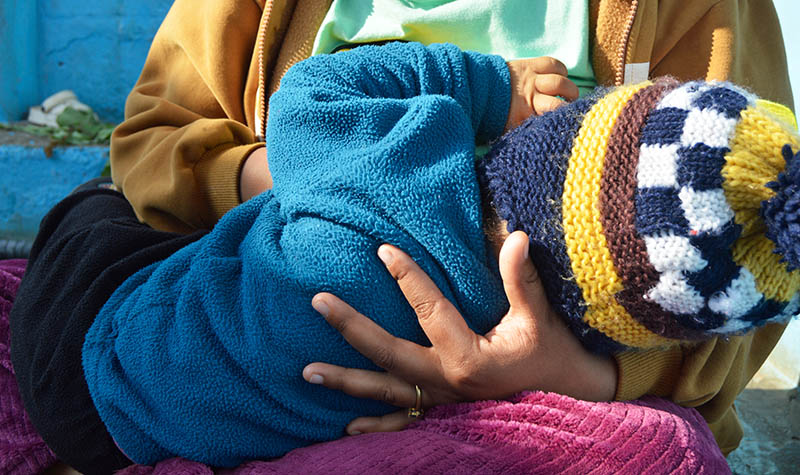
Even after returning to Nepal, the Chinese man has not stopped beating Prabhita. He subjects her to violence right in front of her family. When she visits a friend’s home, he follows her there and abuses her. Even while in China, he did not allow her to stay in touch with her family, smashing her phone whenever she spoke to them.
Her husband endangers not only Prabhita but their son as well. When the child is sick, he neglects his medical treatment. Once, when their five-month-old son was crying with a fever, he hit him.
“Once, when the baby had a fever, he kept crying continuously. He hit the baby when he was just five months old. He would get angry if the child cried or vomited while sick. He would even feed him adult medication, dissolving his own tablets and liquids to force-feed him,” she said.
Even the day before we met her, he had attempted to feed adult medication to their son. Prabhita’s mother saw this and snatched it away. Shaken by the ongoing violence against herself and her son, she remains confused and hesitates to seek legal remedies. “We are already married. I have no intention of breaking it off,” she says.
During our conversation in December last year, she mentioned that her husband wanted to take her back to China. She has now returned to China with that same husband. Through a conversation on WeChat, she shared that she is still facing the exact same mistreatment as before.
'Bride Trafficking to China'
Young Nepali women are not the only ones going to China as brides. The trafficking of brides from other countries to China has been occurring for years. Rather, it is only in recent times that Nepali women have begun falling victim to this trade. According to the Migration Policy Institute’s research article, ‘China’s Demand for Brides Draws Women From Across Southeast Asia, Sometimes by Force,’ thousands of young women from countries like Myanmar have been trafficked to China.
As noted in the article published in 2024, between 2013 and 2017, more than 7,400 women were trafficked to China from Myanmar’s war-torn Kachin and Northern Shan States. Among them, over 5,000 were forced to give birth.
Similarly, Vietnamese government statistics show that between 2012 and 2017, more than 3,000 young Vietnamese women were trafficked, many of whom were sold in China. According to the article, these numbers have surged further following the COVID-19 pandemic.
Impact of the Gender Ratio
The report published by the Migration Policy Institute and our interviews with the young women indicate that Nepali women are being trafficked to China specifically for the purpose of childbearing.
To understand why young women from neighboring countries are falling victim to human trafficking and trade in China, one must look at the one-child policy implemented by the Chinese government in 1979.
That policy led to a gender imbalance in China. The 2021 national census clearly highlights this disparity, showing that males account for 51.24% of the population, while females make up 48.76%.
Similarly, a study titled ‘A Unique Trend of Human Trafficking from South-East Asia to China,’ published that same year by Bridgewater State University in the Journal of International Women’s Studies, also notes that this gender ratio has created a shortage of brides.
“Further detailed investigation is needed regarding how the marriage racket operates in Kathmandu, the tactics used to trap young women, its collusion with other private and government sectors, and the financial gains derived from it.”
Particularly in rural areas, many married Chinese couples prefer to have a son. Driven by patriarchal traditions, older generations sought male heirs, leading to a surge in sex-selective abortions. As a gender imbalance emerged in the population, Chinese men began searching for foreign brides.
The article published in the Journal of International Women’s Studies frames this as a new form of human trafficking, coining the term ‘demi-bride trafficking.’ This phenomenon is occurring not only from Vietnam, Cambodia and Myanmar, but also from Nepal.
The journal includes several case studies as well. In one instance, a Vietnamese woman who was drugged and sold in China for 2,000 yuan (approximately 44,000 Nepali rupees) ended up building a life with the Chinese man. Upon realizing she had been sold, the Vietnamese woman wanted to return home but the man demanded the return of the 2,000 yuan he had spent. Lacking the funds, she remained there.
However, the buyer later began treating her well, without physical abuse or confinement. The journal notes that traditional Vietnamese family values, which emphasize making a marriage work once entered, also contributed to her staying.
Human rights report and the police
According to Nepal Police statistics, a total of 31 individuals were arrested on charges of engaging in criminal activities under the guise of marriage with Chinese nationals between the fiscal years 2019/20 and 2024/25. Among them, 12 are female defendants and 19 are male.
During this period, 15 people were arrested under various charges, including sexual exploitation following marriage in China and attempt to traffic women under the guise of marriage to China. Among those arrested, eight are men and seven are women. The same data indicates that 16 suspects remain absconding, while eight victims have been identified.
However, discrepancies exist even within the data provided by the police. For instance, as reported by media outlets on November 15, 2025, a Department of Immigration team arrested four Chinese nationals in Kathmandu for running an illegal marriage bureau. This incident is absent from the records provided by the Nepal Police.
This discrepancy is also highlighted in the National Human Rights Commission's report Trafficking in Person in Nepal 2026. “Among the accused were three men and one woman who had been residing in Nepal for a long time on various visas. Along with these four Chinese nationals, the police also arrested 14 Nepalis. The arrested individuals were found to be trapping young women from remote and poverty-stricken areas by promising them a bright future in China,” the report states.
According to the details for Fiscal Year 2024/25 provided by the police, six people were arrested in Pokhara during this period for attempting to traffic women to China under the guise of marriage. However, this count omits the arrest of the Chinese nationals operating the illegal marriage bureau.
When pressed for further clarification, the police responded via email: “Since prior data could not be found in our archives, we are unable to provide it.”
The report by the National Human Rights Commission also points out these gaps in police data. It notes that the number of human trafficking offenses or cases registered with the Nepal Police is significantly lower than the estimated actual number of incidents and not all registered cases lead to prosecution. Furthermore, the commission states that the trend in the number of registered and prosecuted cases shows frequent fluctuations, adding that trafficking for forced marriage remains largely unrecorded in police statistics.
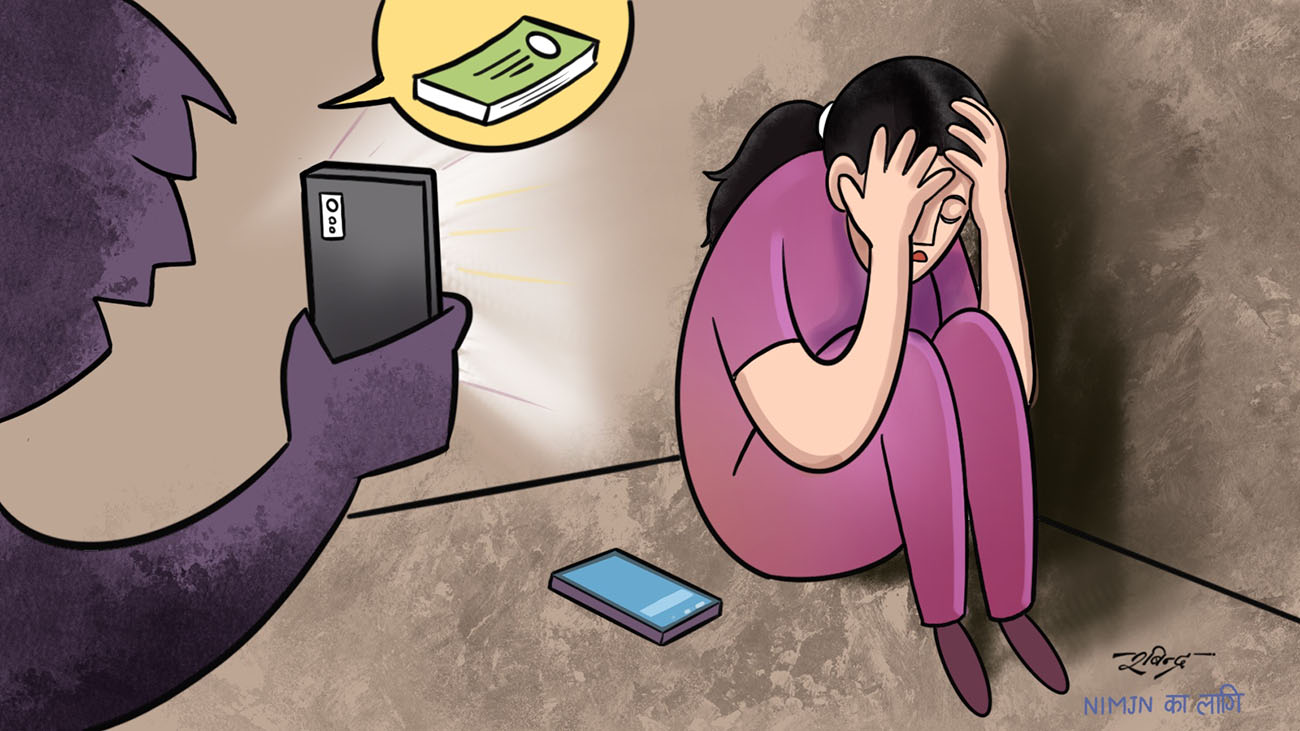
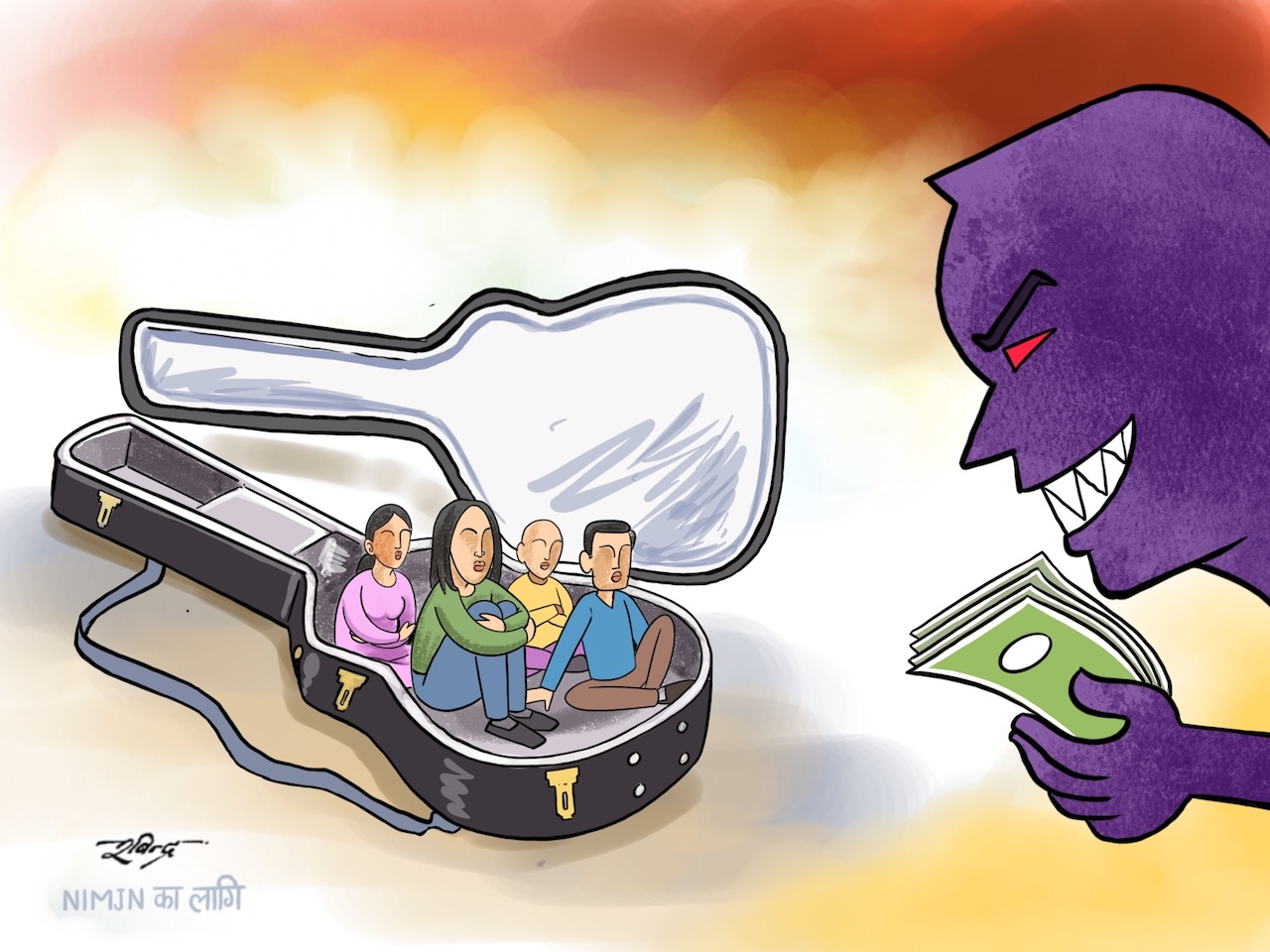
“During field study surveys, several emerging forms of human trafficking came to light, including forced involvement in criminal activities (such as cyber fraud and fraudulent network schemes), cultural events (such as ‘orchestra’ dance), and trafficking for forced marriage. However, these forms of exploitation are not reflected in the quantitative data provided by the Human Trafficking Investigation Bureau of Nepal Police,” the commission’s report states.
As noted by the commission, the nature of human trafficking has evolved in recent times, with trafficking now occurring under the guise of marriage. Yet, no formal complaints of this nature have reached the Human Trafficking Investigation Bureau of Nepal Police.
Spokesperson for the Bureau, Rajan Limbu, stated that while they have received informal information regarding such incidents, no actual complaints have been filed with the bureau. “No cases of this nature have been registered recently. We have heard about it but we have no official record of it, though some cases were registered in the past. We have heard that communications happen via WeChat and things like that but no formal complaint has reached us,” he said.
Charimaya Tamang, founder of Shakti Samuha, explains that teenage girls from rural areas and financially vulnerable families are the ones falling into the trap of marrying Chinese nationals. She noted that this involves not only trafficking but also abuse.
“She gives birth to a child and raises them. Then, after taking them from here through marriage, many do not even keep the women with them,” she said.
Charimaya emphasized that young Nepali women are being trafficked to China under the pretext of marriage, stressing that deep investigation alongside awareness campaigns are urgently needed to stop it.
The National Human Rights Commission has also stated that a thorough investigation is necessary. “Further detailed investigation is needed regarding how the marriage racket operates in Kathmandu, the tactics used to trap young women, its collusion with other private and government sectors, and the financial gains derived from it,” the commission noted in its report.
Please adhere to our republishing policy if you'd like to republish this story. You can find the guidelines here.


Comments